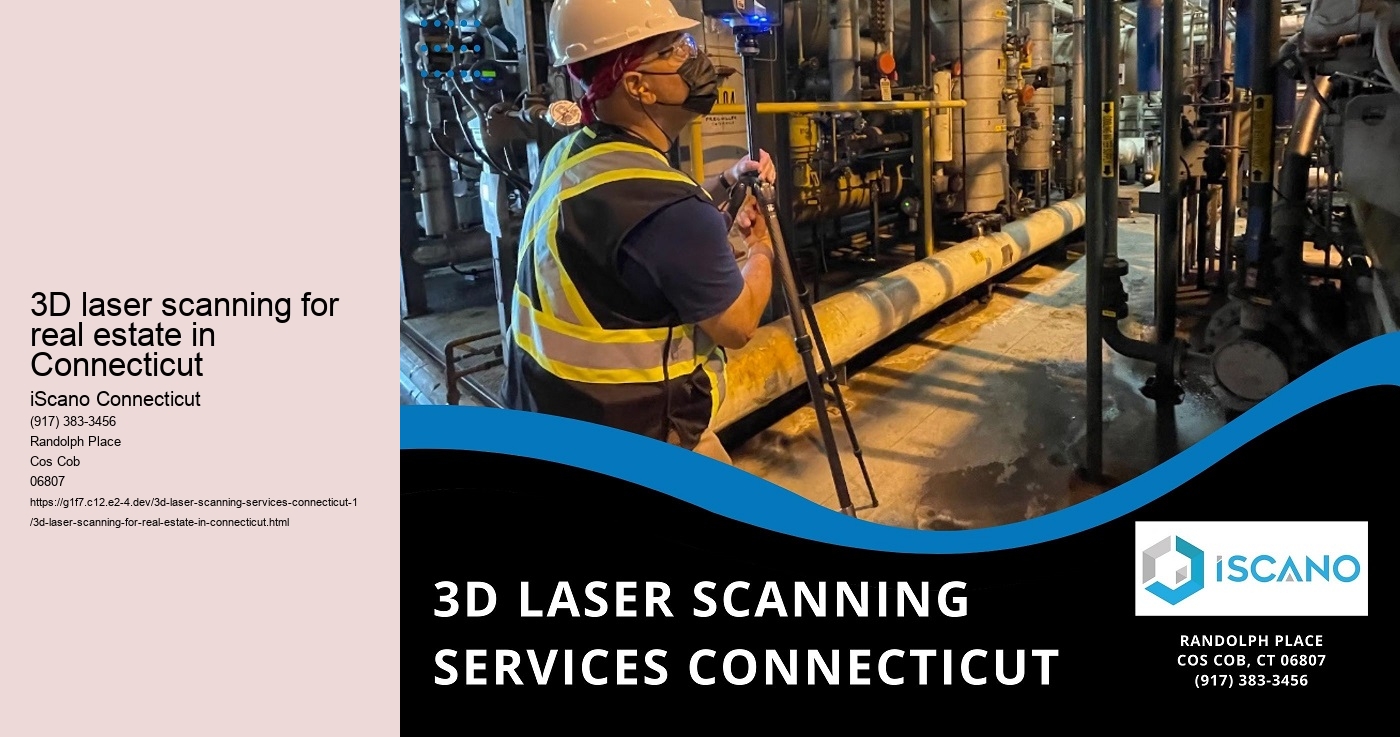
Precision Mapping: The Transformative Power of 3D Laser Scanning in Connecticut
Precision of 3D laser scanning in Connecticut .In an age where technological advancements reshape industries at an unmatched price, one field experiencing extensive improvement is mapping and checking. Among the most revolutionary developments is 3D laser scanning, an innovation that's transforming precision mapping in Connecticut. This state, with its diverse topography and dense urban locations, presents distinct challenges and chances for mapping and evaluating. 3D laser scanning is resolving these obstacles, using unrivaled accuracy and efficiency.
Recognizing 3D Laser Scanning
3D laser scanning, also called LiDAR (Light Detection and Ranging), is a remote sensing method that makes use of light in the type of a pulsed laser to gauge variable distances to the Planet. These light pulses, integrated with various other information taped by the airborne system, produce specific, three-dimensional info concerning the shape and surface features of the landscape. The result is a highly detailed and exact electronic representation of the checked setting.
The modern technology functions by producing laser light beams towards a target surface. When these beam of lights hit the surface, they are shown back to the scanner, which determines the moment it considers the light to return. This time-of-flight data is after that used to determine the range between the scanner and the target. By rapidly repeating this process numerous times per second, the scanner builds a comprehensive 3D point cloud—-- a dense collection of points representing the scanned area.
Applications in Connecticut
Urban Preparation and Advancement
Connecticut’s urban facilities, such as Hartford, New Place, and Bridgeport, benefit significantly from 3D laser scanning. Urban organizers and developers utilize this innovation to create detailed models of existing structures and landscapes. These designs help with more precise planning and style, allowing for better assimilation of new growths with existing metropolitan material.
For instance, 3D laser scanning can capture the elaborate information of historic structures, making sure that brand-new developments appreciate the building heritage of the location. Additionally, it aids in the planning of facilities jobs like roads, bridges, and public transport systems by giving accurate topographical information. This degree of information helps organizers expect potential problems and style services that reduce disruptions throughout building and construction.
Ecological Conservation
Connecticut is understood for its rich natural landscapes, consisting of woodlands, rivers, and seaside areas. 3D laser scanning plays a vital duty in ecological conservation efforts by providing detailed and accurate data on these natural features. Preservationists utilize this data to keep an eye on changes in the environment, such as erosion, deforestation, and environment loss.
As an example, seaside disintegration is a considerable problem in Connecticut. By using 3D laser scanning, researchers can produce topographic maps of the shoreline and monitor changes in time. This information assists in establishing methods to alleviate disintegration and shield useful seaside environments. Likewise, in forestry management, LiDAR technology makes it possible for the mapping of tree canopy frameworks, assisting in the evaluation of woodland health and wellness and biodiversity.
Historical Preservation
Connecticut is home to several historical sites and spots. Preserving these treasures for future generations is a priority, and 3D laser scanning is an important device in this initiative. The technology allows for the development of specific digital models of historical structures, capturing every information with high precision.
These digital models offer several functions. They can be utilized for documentation and archival, ensuring that exact documents of the frameworks exist even if the physical structures are damaged or weaken over time. Furthermore, the versions can be made use of in reconstruction tasks, providing designers and building contractors with comprehensive blueprints that help in maintaining the authenticity of the original designs.
Framework Upkeep
Maintaining framework is a continuous challenge for any state, and Connecticut is no exception. Roadways, bridges, tunnels, and other important facilities require normal evaluations and maintenance to make sure safety and performance. 3D laser scanning boosts this procedure by giving detailed and accurate data on the problem of these frameworks.
As an example, bridges are subject to wear and tear because of constant usage and ecological factors. Typical inspection methods can be time-consuming and might not always identify refined indicators of damage. 3D laser scanning, nonetheless, can rapidly capture in-depth pictures of a bridge's surface area, identifying fractures, deformations, and other indications of damages that might be missed out on by the nude eye. This permits even more positive maintenance and repair, possibly prolonging the life expectancy of the facilities and enhancing safety and security.
Benefits of 3D Laser Scanning
The fostering of 3D laser scanning in Connecticut brings countless benefits, making it a recommended option for different applications.
High Precision and Information
Among one of the most substantial benefits of 3D laser scanning is its ability to catch extremely precise and thorough information. Standard evaluating methods, while reliable, often include a degree of approximation and can be lengthy. On the other hand, 3D laser scanning gives specific measurements with millimeter accuracy, substantially lowering the margin of error.
Rate and Efficiency
3D laser scanning is incredibly fast contrasted to traditional methods. A single scan can capture numerous information points in a matter of mins. This speed equates to enhanced performance in information collection, enabling tasks to move on faster. As an example, surveying a big building and construction website that would certainly take days making use of typical techniques can be finished in a few hours with 3D laser scanning.
Security
Safety is a vital issue in numerous checking and mapping jobs, particularly those involving harmful or hard-to-reach locations. 3D laser scanning improves safety and security by enabling information collection from a distance. Surveyors can operate the scanners from another location, reducing the demand to physically access dangerous places.
Comprehensive Information Collection
The point cloud data created by 3D laser scanning gives an extensive and in-depth view of the scanned atmosphere. This information can be utilized for different analyses, including topographical mapping, volumetric computations, and architectural analyses. The adaptability of the data permits it to be made use of throughout various phases of a job, from first planning to last assessment.
Integration with Other Technologies
3D laser scanning data can be conveniently incorporated with various other modern technologies, such as Geographic Information Systems (GIS), Building Information Modeling (BIM), and augmented reality. This combination boosts the worth of the information by permitting it to be used in a wide range of applications. For example, incorporating 3D laser scanning information with BIM permits more accurate and in-depth structure designs, boosting building and construction quality and effectiveness.
Difficulties and Future Potential Customers
While 3D laser scanning offers numerous benefits, it is not without its difficulties. The initial expense of the devices and software can be high, which may be a barrier for smaller firms or jobs with restricted budget plans. Additionally, the modern technology needs specialized training to run and translate the data properly.
Data management is an additional challenge. The factor clouds produced by 3D laser scanning can be large and complicated, needing considerable storage space and handling power. Effectively managing and evaluating this information can be requiring, demanding robust IT framework and expertise.
Regardless of these challenges, the future of 3D laser scanning in Connecticut looks promising. As modern technology advancements, prices are expected to decrease, making it much more accessible to a broader series of customers. Improvements in data processing and monitoring will additionally make it much easier to manage huge datasets, further enhancing the utility of 3D laser scanning.
Moreover, ongoing advancements in related areas, such as artificial intelligence and machine learning, are likely to complement 3D laser scanning. These innovations can assist automate data analysis, identify patterns, and make anticipating assessments, including an additional layer of worth to the information accumulated through 3D laser scanning.
Conclusion
3D laser scanning is transforming accuracy mapping and surveying in Connecticut, supplying unprecedented precision, efficiency, and security. Its applications cover urban planning, ecological conservation, historic conservation, and infrastructure upkeep, to name a few. Regardless of the challenges, the innovation's advantages make it an effective tool for a variety of tasks.
As Connecticut remains to grow and develop, 3D laser scanning will certainly play a vital duty in making sure that this growth is managed in a sustainable and effective manner. The comprehensive and accurate data provided by this technology will assist coordinators, programmers, and conservationists make educated decisions, protecting the state's all-natural and social heritage while promoting progression and advancement.